Protection Technology Adaptation Solutions for Battery Swapping Cabinets in Complex Overseas Environments
Views : 1839
Update time : 2026-01-22 09:52:42
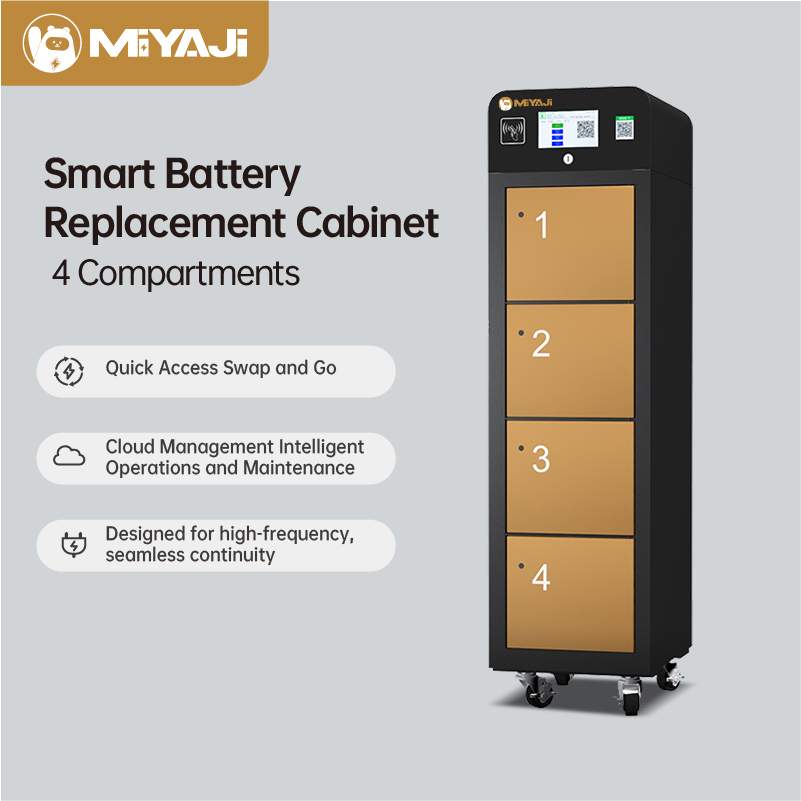
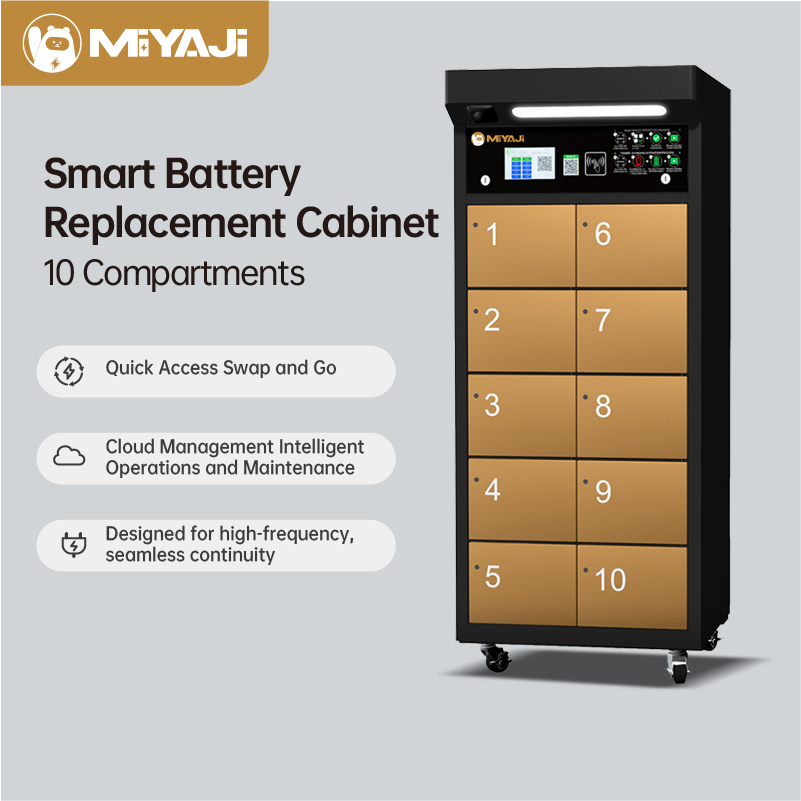
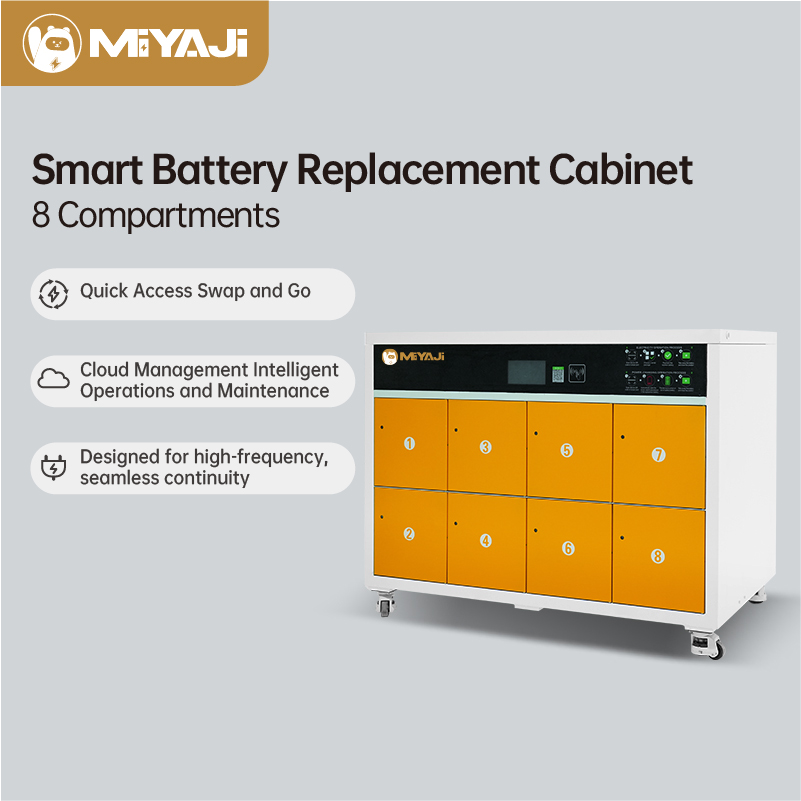
Overseas battery swapping cabinet deployments face multiple complex environmental challenges, including high temperature, high humidity, dust storms, salt spray, low temperature, and power grid fluctuations. The adaptation of protection technology directly determines the stability, safety, and lifespan of the equipment. This article, based on the core parameters of the MIYAJI 12-compartment intelligent battery swapping cabinet, provides targeted protection technology solutions for different scenarios to support stable operation in multiple overseas regions.
I. High Temperature and Dust Storm Environments (Middle East, Africa, Australia)
Core Pain Points: Extreme high temperatures of 40-55℃ can easily lead to battery thermal runaway and circuit aging; dust intrusion can cause component jamming and short circuits.
Adapted Protection Technologies
1. Temperature Control and Heat Dissipation Protection: Equipped with a dual temperature control system (independent temperature control for each compartment + centralized temperature control for the entire unit), using temperature-sensing air-cooling technology to automatically adjust the fan speed and enhance heat dissipation during high-temperature periods; the cabinet has pre-reserved ventilation ducts and is equipped with dust filters to prevent dust from entering the ducts, balancing heat dissipation efficiency and dust prevention.
2. Cabinet Sealing and Protection: Upgraded protection level to IP54 and above, using thickened galvanized steel cabinet with electrostatic spraying (corrosion-resistant and high-temperature resistant coating), multi-layer sealing strips on the door, and waterproof and dustproof filling in gaps to prevent sand and dust from entering core components.
3. Battery Safety Protection: Linked with the BMS battery management system, it monitors battery temperature in real time. In case of high temperature, it automatically pauses charging and initiates cooling. Combined with an independent thermal aerosol fire suppression system in each compartment, it provides millisecond-level response to the risk of thermal runaway, avoiding cascading accidents.
II. High Humidity and Salt Spray Environments (Southeast Asia, Latin American Coast, Northern European Coast)
Key Pain Points: High humidity and salt spray can easily cause cabinet corrosion, short circuits, and battery oxidation. Rainy season water accumulation may cause equipment immersion damage.
Adaptive Protection Technologies
1. Corrosion Protection: The cabinet employs a dual process of hot-dip galvanizing and electrostatic spraying, with a coating thickness ≥80μm. It uses a salt spray-resistant coating and has passed a 72-hour salt spray test. The core circuit interfaces use waterproof aviation plugs, and metal components are passivated to prevent salt spray corrosion.
2. Waterproof and Moisture-proof Protection: The protection level is upgraded to IP65. The cabinet features a sealed design with a waterproof drainage channel and drainage holes at the bottom to prevent rainwater accumulation. An internal moisture-proof and dehumidification module automatically controls humidity between 40% and 60% to prevent components from aging due to moisture.
3. Electrical Safety Protection: Equipped with leakage protection and water immersion detection devices. Upon detection of water accumulation or leakage, the power supply is immediately cut off and a remote alarm is sent, triggering the cloud management system to lock the equipment and prevent safety hazards.
III. Low-Temperature and Extremely Cold Environments (High Latitude Europe, Northern North America, Central Asia)
Core Pain Points: Temperatures below -10℃ cause decreased battery activity, a sharp drop in charging efficiency, embrittlement of circuit components, icing, and short circuits, affecting equipment startup and operation.
Adaptive Protection Technologies
1. Low-Temperature Preheating Protection: Each compartment has a built-in low-temperature preheating module. A start-up threshold is set via a cloud system, automatically activating preheating when the temperature drops below 0℃, ensuring the battery and circuit components are at a suitable operating temperature, improving charging efficiency and equipment stability.
2. Cabinet Insulation Protection: The cabinet is filled with insulation cotton, and the door uses a double-layer insulation structure to reduce heat loss; when deployed outdoors, a snow cover is used to prevent snow accumulation from affecting heat dissipation and temperature control, while also preventing melted snow from seeping into the cabinet.
3. Battery Adaptation Protection: Optimized battery BMS parameters are adapted to low-temperature discharge characteristics, limiting the maximum charging current in low-temperature environments to prevent battery overcharging damage and extend battery life at low temperatures.
IV. Power Grid Fluctuations and Lightning Protection Environment (Remote Areas in Africa, Rural Latin America)
Core Pain Points: Unstable power grid voltage (fluctuations exceeding ±30%), frequent power outages, and susceptibility to lightning strikes during thunderstorms, damaging circuits and control systems.
Adaptive Protection Technologies
1. Electrical Voltage Stabilization Protection: Built-in wide-voltage adapter module supports AC220V±20% input range; customizable three-phase power adapter solutions are available. Combined with surge protectors and overload, overvoltage, and undervoltage protection devices, it buffers the impact of power grid fluctuations and prevents circuit burnout.
2. Lightning Protection and Grounding: The cabinet is equipped with a dedicated lightning protection device with a grounding resistance ≤4Ω. When deployed outdoors, it connects to the ground lightning protection network to conduct lightning current to the earth. The control system adopts a lightning isolation design to block the impact of lightning-induced current on core components.
3. Off-Grid Adaptation Protection: Linked with the integrated photovoltaic, energy storage, and charging module, it automatically switches to off-grid mode when the power grid is interrupted, relying on the energy storage battery to maintain basic equipment operation, ensuring uninterrupted battery swapping services, and is suitable for remote areas without power grids.
V. Universal Protection Technology for All Scenarios (Cross-Regional Adaptability)
1. Intelligent Monitoring and Protection: Utilizing a 4G full-network connected cloud management system, it monitors cabinet temperature, humidity, and sealing status in real time. In case of anomalies, it immediately sends alarms and triggers emergency protection measures (such as activating cooling and cutting off power), enabling remote control and risk prediction.
2. Modular Protection Design: Adopting a modular structure, the core circuitry, temperature control, and fire extinguishing devices are independently partitioned. A fault in one area does not affect overall operation, while facilitating on-site maintenance and replacement overseas, reducing maintenance costs.
3. Compliant and Adaptable Protection: Compliant with electrical safety standards in the EU, North America, Southeast Asia, and other regions (such as EU WVTA and Brazil's INMETRO). Protection technical parameters are incorporated into the equipment certification system to ensure compliant deployment overseas.
VI. Key Points for Optimizing the Implementation of Protection Technologies
1. Regional Customization: Optimize protection solutions based on the priority of core environmental pain points in the target market. For example, strengthen high-temperature and dust protection in the Middle East, and focus on high-humidity and salt spray protection in Southeast Asia.
2. Cost Balancing: Adopt IP65+ full-dimensional protection in high-end markets, while simplifying the protection level (e.g., IP53) in lower-tier markets according to the scenario to control equipment costs.
3. Operation and Maintenance Collaboration: Link protection technologies with the cloud management system to regularly generate protection status reports, guiding overseas operation and maintenance teams to conduct cleaning and sealing checks, and proactively identify potential hazards.
In summary, the adaptation of overseas battery swapping cabinet protection technologies should be "scenario-centric, parameter-supported, and compliance-based." Through a combination of multi-dimensional protection technologies, it should balance equipment stability and operational economy to build a solid safety barrier for the overseas charging and swapping networks of new energy vehicles.
相关新闻